Developmental Milestones
Delayed Developmental Milestones
Why tracking normal development is an essential part of childcare
Witnessing your child’s “firsts” — first steps, first words, that first genuine smile — is one of the most rewarding parts of parenthood.
But these moments are about more than just giving the parents some great memories. They are also developmental milestones that serve as reassuring reminders that your child is growing as expected.

When babies suffer from birth injuries, it can be difficult to predict how it might affect them later in life. The first signs of physical or neurological damage may only become clear months later once they’re failing to develop new skills.
Parents may express concern that their child is not sitting up, standing, or communicating as expected during scheduled wellness checkups. The doctor may also notice additional concerns like an overly stiff or floppy appearance. This is typically when the child first receives an official diagnosis for their disabilities, such as autism or cerebral palsy.
Babies who suffer from birth injuries have a higher chance for delayed developmental milestones later in life. Brain damage at birth, in particular, can cause permanent complications like hypoxic ischemic encephalopathy (HIE), cerebral palsy, and intellectual disabilities.
Children with these kinds of injuries usually need significant treatments, therapies, procedures, and intensive care to manage their disabilities. This care is never cheap, often placing a heavy financial strain on families who are already grappling with emotional grief.
Paying attention to your baby’s developmental milestones can help you stay alert for signs of disabilities or complications. On this page, we will cover important milestones throughout early childhood and the common red flags to watch out for. We will also discuss your legal options when you suspect your child’s delays stem from preventable injuries at birth.
Contact Our Top Rated Birth Injury Lawyers Today
When a child’s injuries stem from a doctor’s, nurse’s, or other medical professional’s careless mistakes, financial compensation may be available. Families should never have to pay the price for a healthcare provider’s birth injury negligence.
Free Legal Consultation
Birth Injury Lawyers
(888) 987-0005Our Birth Injury Lawyers are available to meet you in your home or the hospital.
For over 40 years, Miller Weisbrod Olesky's national birth injury lawyers have been helping families seek justice for preventable injuries at birth. We have witnessed firsthand the pain that medical negligence can bring to innocent children and their families. We can help these families pursue medical malpractice claims in a birth injury lawsuit.
Our vast network of medical experts and nine in-house nurses gives us the edge over other national birth injury firms. Since our beginning, we have secured hundreds of successful jury awards and settlements totaling over $1 billion for our clients.
Miller Weisbrod Olesky's specialized legal and medical team takes care of our families, both inside and outside the courtroom. The families we represent receive not just an attorney, but a full team of medical experts, nursing advocates, and paraprofessionals.
Your team is here to help answer questions and provide updates on your case. But we also can help make sure your child is getting the care they need while the case is ongoing. We help families find specialists, schedule medical visits, obtain important health records, provide transportation and lodging, and more.
Our national birth injury lawyers work for your family on a contingency fee basis. This means we offer help at no upfront cost, only charging attorneys’ fees on cases we win.
After securing a settlement or jury award, we will only charge a pre-agreed percentage outlined in an attorney-client retainer contract. Our top rated birth injury attorneys will only take on cases we know we can win.
Over the years, we have built up an impressive track record of results that speaks for itself.

Recent Birth Injury Settlement:
After doctors failed to monitor a laboring mother’s blood pressure, her child experienced an HIE brain injury at birth. The damage led to significant developmental delays and impairments that followed them into early childhood.
Our specialized legal and medical division recovered $13,750,000 to help the family afford life changing developmental therapy.
What Are Developmental Milestones?

Developmental milestones are significant events, skills, or accomplishments that children learn as they age. Parents and pediatricians can use them as reassurance that the baby is growing up normally without issues.
It’s true that children sometimes progress at slightly different rates. One nine-month-old might be walking while another is just starting to crawl. However, a baby or child who misses several milestones is cause for concern.
With some conditions – like cerebral palsy, for example – early intervention is crucial. Therapies, surgeries, medications, caregivers, and assistive technology can improve a child’s future and help them progress as far as possible.
Types of Developmental Milestones
There are four main categories that many pediatricians and early childhood specialists use to classify a child’s developmental milestones:

- Movement/Physical Development: Children’s ability to use their bodies for things like sitting, walking, and eating. Includes large movements (gross motor skills) and small, more coordinated movements (fine motor skills).
- Social/Emotional Domain: Children’s ability to relate to others and express their feelings and emotions.
- Language/Communication: Children’s ability express their needs, share their thoughts, and understand what others say to them.
- Cognitive: Children’s ability to learn, solve problems, explore their environments, and use skills like counting and learning the alphabet.
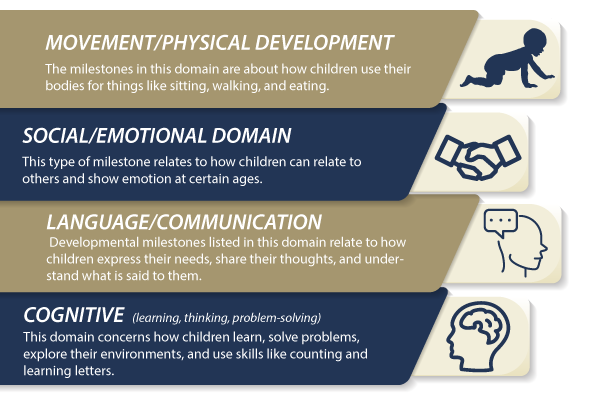
It’s important to note that some goals or achievements fit into more than one category. For example, a child’s ability to follow instructions speaks to both their communication and cognitive skills.
Additionally, some milestone domains can break into smaller subcategories. Developmental specialists will want to closely monitor a child’s hearing, speech, vision, and physical milestones alongside the other categories.
Hearing Development Delays

Hearing developmental milestones track how babies and children respond to sounds, voices, language, and communication cues as they grow up.
Strong hearing skills are crucial to speech development, learning, and building strong social and emotional bonds.
Speech Development Delays

Developmental speech milestones focus on how children learn to communicate through sounds, words, gestures, and sentences.
Speech development relies primarily on healthy brain function, muscle coordination, and hearing. Babies with brain damage or other birth injuries may have a higher risk for speech impairments and delayed speech milestones.
Physical Development Delays

Physical developmental milestones measure how children build muscle strength, coordination, balance, and movement skills.
Birth injuries to the brain or spinal cord injuries can sometimes disrupt neuromuscular control and cause conditions like cerebral palsy. Children with these injuries will likely experience at least some degree of impaired gross motor function.
Visual Development Delays

Visual developmental milestones evaluate children’s ability to focus, track and recognize objects, process visual input, and coordinate vision with movement. Strong vision can support learning, communication, social development, balance, and coordination.
Birth injuries can sometimes damage a child’s visual processing centers and lead to vision impairments. Common problems that cause developmental delays include cortical visual impairment (CVI) or retinopathy of prematurity (ROP).
Is Your Child Meeting Recommended Milestones?
Your child’s doctor may give you some ideas of what stages your child is going through. However, you can also watch for signs of problems using the following developmental milestones charts.

Select A Milestone


Developmental Milestones at 3 Months

The following developmental checklists outline expected developmental milestones, red flags, and parenting tips for a baby by 3 months:
Developmental Milestones at 6 Months

The following developmental checklists outline expected developmental milestones, red flags, and parenting tips for a baby by 6 months:
Developmental Milestones at 9 Months

The following developmental checklists outline expected developmental milestones, red flags, and parenting tips for a baby by 9 months:
Developmental Milestones at 1 Year

The following developmental checklists outline expected developmental milestones, red flags, and parenting tips for a baby by their first birthday:
Developmental Milestones at 18 Months

The following developmental checklists outline expected developmental milestones, red flags, and parenting tips for a baby by 18 months:
Developmental Milestones at 2 Years

The following developmental checklists outline expected developmental milestones, red flags, and parenting tips for a baby by their second birthday:
Developmental Milestones at 3 Years

The following developmental checklists outline expected developmental milestones, red flags, and parenting tips for a baby by their third birthday:
Developmental Milestones at 4 Years

The following developmental checklists outline expected developmental milestones, red flags, and parenting tips for a baby by their fourth birthday:
Developmental Milestones at 5 Years

The following developmental checklists outline expected developmental milestones, red flags, and parenting tips for a baby by their fifth birthday:
What Are Some of the Causes of Developmental Delays?

Babies can be at risk for future developmental delays or disabilities because of the following factors:
Genetics

Genetic issues often cause conditions like Down syndrome and autism. These can lead to delayed developmental milestones across multiple domains for the baby.
Medical providers should be able to recognize when a child might have one of these conditions through prenatal testing screenings.
Pregnancy Complications

Pregnancy complications like high blood pressure (preeclampsia), gestational diabetes, anemia, or maternal infections can increase the baby’s risk for harm.
When medical professionals fail to properly recognize that risk or respond to it, these issues can complicate delivery. If a baby sustains birth injuries as a result of their mother’s complications, they are more likely to experience delayed developmental milestones.
Labor and Delivery Complications

Some of the more serious issues during pregnancy can result in labor and delivery complications. Issues like prolonged labor, delayed c-sections, umbilical cord problems, fetal distress, or misusing delivery instruments can cause severe birth injuries.
When these injuries cause brain damage to the baby, it can impact their development after birth. Injuries like brain bleeds and oxygen-deprivation-related conditions like hypoxic-ischemic encephalopathy (HIE) have serious potential to cause developmental delays in life.
Premature Birth
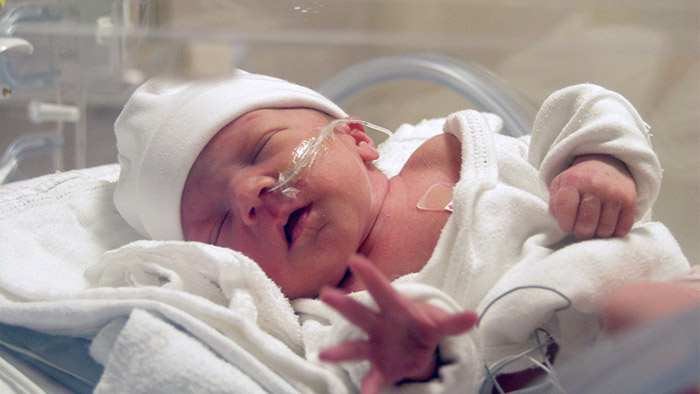
A child’s gestational age at birth can make a difference as they progress along average developmental timelines.
Premature infants are far more likely to have neurodevelopmental disabilities.
When observing whether your child is hitting their goals, remember to adjust expectations based on their gestational age. For example, a baby three months early might be three months late when meeting their milestones.
Inadequate Neonatal Care
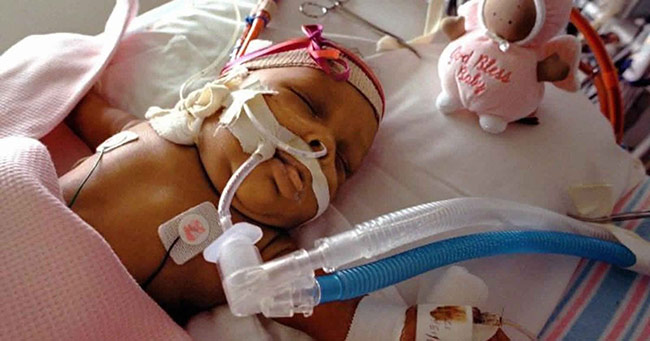
Babies may need neonatal resuscitation immediately after birth to prevent oxygen deprivation. Also, some babies are at risk for birth complications that can cause serious injuries.
Conditions like neonatal hypoglycemia, hyperbilirubinemia (jaundice), and kernicterus (a serious disorder that causes brain damage) require immediate treatment. When medical providers don’t respond properly, a small injury can progress into one that causes developmental delays later in life.
Did Medical Malpractice Cause My Child’s Developmental Delays?

The parents of children with developmental delays often want answers. They want to know what is causing these delays. Was it genetics? Was it something they did? Or was it a result of negligent delivery room errors that caused preventable brain injuries?
Miller Weisbrod Olesky's dedicated birth injury lawyers want to help you find those answers.
We have seen hundreds of cases where doctors, midwives, or nurses breached their duty of care while delivering newborns. Mistakes like missing abnormal fetal heart rates or using excessive force during delivery can cause permanent injuries. These birth injuries have lasting impacts on a child’s growth and can prevent them from gaining new skills.
Overcoming these challenges requires a myriad of intervention treatments, therapies, and evaluations. Not all families have the resources to ensure their child receives the early intervention they need to stay on track. But speaking with a knowledgeable birth injury attorney can be the first step in securing those resources.
Sometimes families are hesitant to reach out to a medical malpractice attorney or law firm. They may feel overwhelmed by their circumstances or feel worried about proving the strength of their medical malpractice claim.
But the only way to find out if you have a birth injury case is to reach out for help. Talking to an attorney who understands how birth injuries delay important milestones can help you better understand your legal options.
What Is the Statute of Limitations in a Birth Injury Case?

A statute of limitations (SOL) is a law that sets a time limit on how long an injured person has to file a lawsuit after an accident. It is essential to understand that statutes of limitations vary based on the case and the state where you file. For instance, the deadline for birth injury claims is typically different from other claims, such as injury to private property.
Generally, the clock starts ticking on the date the injury occurred. However, there are exceptions to this rule. In some cases, the statute of limitations starts when a person discovers or reasonably should have discovered an injury. When dealing with government agencies, SOLs can become even more complex.
For example, special rules may apply if you are pursuing a claim against:
- A federal employee
- Someone employed by a military hospital, Veterans Administration facility, or a federally funded medical entity
In these cases, you may need to file a birth injury claim under the Federal Tort Claims Act (FTCA). In FTCA cases, claimants must go through certain administrative procedures before filing a lawsuit. In some states, you may have less time to give notice if:
- The negligent party was a local or state government hospital
- The doctors and medical providers are employees of a governmental entity
If you file your case outside of the statute of limitations, the court will typically dismiss it. This means you will not be eligible to recover compensation for you or your child’s injuries.
Determining when a statute of limitations begins on your case can be tricky. If you are considering pursuing compensation for a birth injury, contact an attorney as soon as possible.
How Can Our Birth Injury Attorneys Help?
Even though each child develops at their own pace, developmental delays at any age are a valid cause of concern. When you suspect those delays may come from a preventable injury before or during birth, our attorneys can help.
Our specialized legal and medical research team will thoroughly investigate the facts and hold responsible medical providers accountable. The compensation our clients receive helps them pay for:
- Their child’s current and future birth injury treatments
- Physical therapy, occupational therapy, speech therapy, or other specialized interventions
- Assistive equipment and devices to help cope with disabilities
- Other expenses associated with caring for a child with brain injuries, seizure disorders, and/or cerebral palsy.
Our Process
Our team of specialized birth injury attorneys, in-house nurses, and paraprofessionals is here to help your family seek justice. We use a comprehensive medical case review process to assess claims and hold negligent parties responsible.
We’ll begin by learning more about your delivery by gathering records to determine what happened before, during and after. We will determine whether healthcare professionals properly responded to your labor and delivery complications like oxygen deprivation or premature birth.
We will consult with our network of medical experts who review your records and provide their professional opinion. If we feel medical negligence caused your baby’s developmental delays, then we will meet with you to discuss further. If you decide to hire us, we will waste no time filing your claim and building your baby’s case.
You will not have to pay upfront for services at any point in our legal intake process. The medical review of your case and the consultation are free. We will only charge a pre-agreed percentage outlined in the client-attorney retainer contract. We will never charge families unless we recover compensation for their child.
The sooner you reach out, the sooner we can investigate your case and gather evidence to support your claim. You can contact us today to schedule your free consultation by calling our toll-free line at (888) 987-0005. We are also reachable through filling out our online request form below.
National Birth Injury Law
Our National Birth Injury Attorneys, nurses, and support staff understand that parents of children with birth injuries feel overwhelmed. So, every client has the attention and support of a team of trained, compassionate professionals. But we don’t just offer compassion.
We offer a process to help you discover whether your child’s birth injury, HIE, cerebral palsy or brain injury at birth was caused by medical malpractice.
Call our offices today at (888) 987-0005 for experienced assistance in a free consultation.
Quick Links
Testimonials
- Lyric C. I feel like our voice was heard in a sense of what can possibly go wrong in a delivery and finding us answers. I feel with our settlement, we are now in a comfortable position to provide for our son.
- Lyssa L. They are not just people that say “hey let's get you money and let's go” The law firm was very thorough with us. It was awesome. I don't want to cry, because I think about and it's amazing that they were able to help me and that we were able to help my son and get the story out there.
- Jay C. Throughout the process, one thing was clear to us, the ultimate interest of our child was the utmost concern of Max and his team and as parents navigating a situation like that, that was refreshing to know we had them firmly on our side. I highly recommend them.
Popular Cities
- ★ Dallas Birth Injury
- ★ Houston Birth Injury
- ★ Atlanta Birth Injury
- ★ Chicago Birth Injury
- ★ Philadelphia Birth Injury
Locations
★ Dallas
11551 Forest Central Drive, Ste. 300
Dallas, TX 75243
★ Houston
12929 Gulf Freeway, Ste. 111
Houston, TX 77034