Therapeutic Hypothermia
What is Therapeutic Hypothermia?
Cooling Therapy May Reduce Brain Injury in Babies with Hypoxic-Ischemic Encephalopathy (HIE)
Hypoxic-ischemic encephalopathy (HIE) is a severe brain injury that some newborns suffer before, during, or even after birth. Hypoxic means the infant suffered from lower oxygen levels, while ischemic refers to a reduced blood flow. Either or both conditions can harm a baby’s brain (encephalopathy).
Brain injury can progress in the first hours and days of a newborn’s life. However, a specialized treatment called therapeutic hypothermia can stop that progression and possibly minimize brain damage for some babies.

This medical procedure is known by several other names, including:
- Neonatal therapeutic hypothermia,
- Hypothermia therapy,
- Cooling therapy, and
- Brain cooling
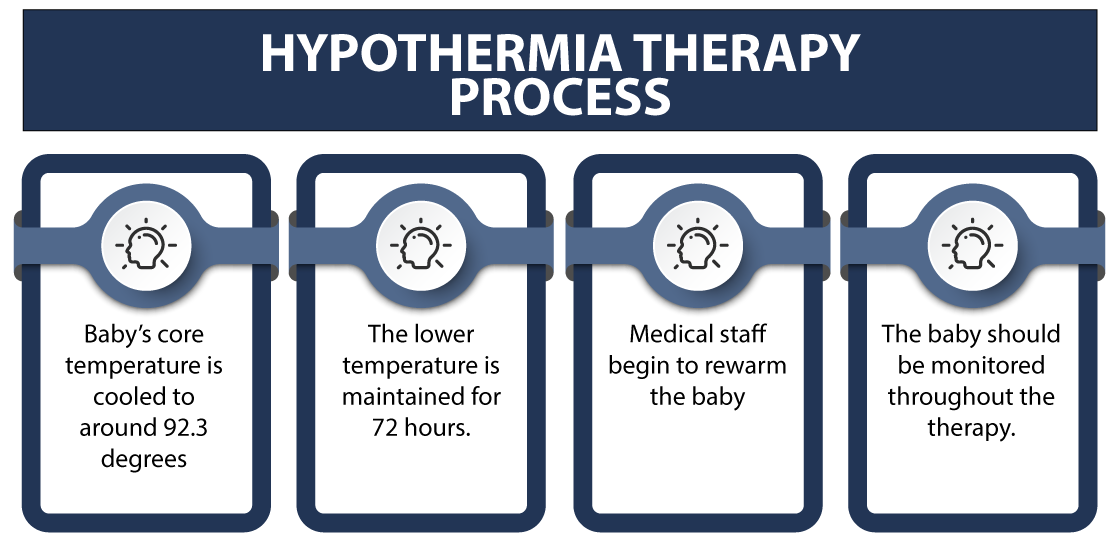
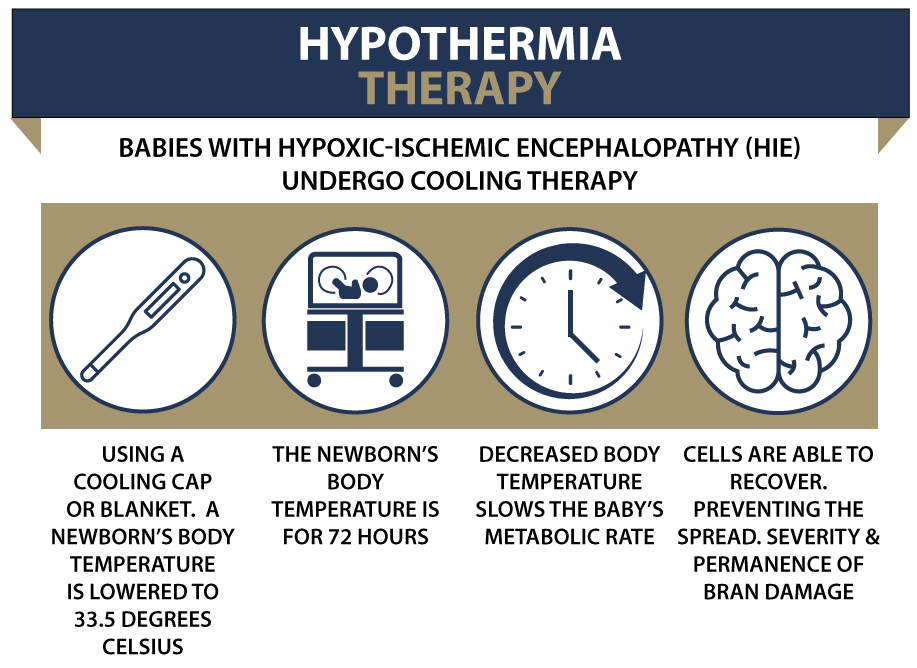
The therapy involves cooling the baby’s core temperature to around 92.3 degrees Fahrenheit. After 72 hours, medical staff begin to gradually rewarm the baby while simultaneously monitoring the baby’s vital signs. Cooling or rewarming too quickly can harm the baby’s brain and other organs.
Doctors use special equipment to cool the baby, monitor the baby’s status, and rewarm the baby, including the following:
- Special blankets for cooling and rewarming,
- Esophageal or rectal temperature probe
- Overhead warming beds
- Cardio and respiratory monitors
- EKG monitor
- Electroencephalography (EEG) machines
- Gel cushions
- Ice packs (for passive cooling)

Hypothermia therapy must be done correctly and at the proper time to minimize brain damage. The optimal window of time is up to 6 hours after birth but could begin earlier.
Not all hospitals can do hypothermia therapy. Babies often must be transported to a hospital that offers this specialized treatment. In fact, transport teams sometimes consist of people trained to begin therapeutic hypothermia during the transport. This may be done so that treatment begins within 6 hours after birth.

When transport teams are not qualified to perform hypothermia therapy, they may use passive cooling to start lowering the baby’s core temperature. Passive cooling involves ice packs, removing warming equipment, and removing the infant’s clothing.
An infant’s future depends on doctors, nurses, midwives, hospitals, and other providers meeting their standard of care to all patients. Failing to do so can be medical negligence or medical malpractice. Birth injury attorneys can help families determine if their child was harmed because of medical errors and hold those responsible accountable.
Why Do Some Babies Need Hypothermia Treatment?
Therapeutic hypothermia is not administered to all newborns. Babies who may have hypoxic-ischemic encephalopathy (HIE) and meet other criteria are eligible. Events that happened during labor should alert medical professionals that a baby is currently suffering HIE or another form of birth-related brain injury.
- HIE starts with oxygen deprivation. In fact, the term “hypoxia” means a shortage of oxygen. The causes of the low oxygen include maternal medical conditions, complications during labor and delivery, and birth trauma.
- Faced with a low oxygen supply, the baby’s body directs oxygen to the baby’s heart. However, that can deprive other organs – including the brain – from receiving enough oxygenated blood.
- The baby’s liver, kidney, lungs, heart, and brain can be damaged from lack of oxygen and reduced blood flow. “Ischemic” refers to the reduced blood flow. And “encephalopathy” means a brain dysfunction.
The medical providers caring for the mother and baby have a duty to monitor both of them carefully at all times. When a newborn could have suffered brain damage, they should consider therapeutic hypothermia.
But what happens when doctors cool the baby?
A number of complex processes occur or are suppressed, particularly in the baby’s brain. In fact, therapeutic hypothermia treatment may have the following effect on the infant:
- Reduction of the cerebral metabolism that slows cell depolarization
- Reduction of the accumulation of excito-toxic neurotransmitters
- Suppression of oxygen-free radical release
- Suppression of expected cell death (apoptosis)
It’s crucial that doctors and other healthcare providers carefully assess the events that caused their potential brain damage in connection with current test results. Failing to provide this treatment could worsen the baby’s brain injury, causing lifelong disabilities or death.
It could also be medical malpractice or medical negligence. The experienced birth injury lawyers at Miller Weisbrod understand hypoxic-ischemic encephalopathy (HIE), cerebral palsy, and other birth-related medical malpractice cases.

How Do Doctors Decide Whether a Baby Is Eligible for Therapeutic Hypothermia?
When doctors and other healthcare providers must move quickly when they see signs that brain damage may be occurring. In fact, brain cooling therapy must start within the first six hours of the baby’s life.
But babies may not be eligible if:
- Gestational age is below 36 weeks.
- The baby is more than 6 hours old.
- Other life-threatening conditions exist, especially involving the respiratory or cardiovascular systems.
- The infant’s birth weight is less than 1800 grams (about 4 pounds).
- There’s significant head trauma or skull fracture causing a major brain bleed.
- The baby has certain chromosomal anomalies, including trisomy 13.
- It appears inevitable that the baby will die.
Doctors assess potentially eligible newborns based on the following criteria recommended by the Academic Medical Center Patient Safety Organization (AMC PSO):
Criteria 1: The infant’s gestational age must be at least 36 weeks and meet one of the following four criteria:
- Have an Apgar score less than five at ten minutes after birth
- Required positive pressure ventilation at ten minutes
- Have an umbilical cord pH or any arterial pH less than seven within 1 hour after birth
- Show a base deficit more than 16 mmol/L in cord blood or arterial blood within one hour of life
Criteria 2: Newborns must have moderate or severe encephalopathy according to the results of a modified Sarnat exam.
- Sarnat stage 2: The baby may be lethargic and floppy with bradycardia, weak reflexes, trouble breathing, and having seizures.
- Sarnat stage 3: The newborn might be neonate may be unconscious or nearly unconscious, lacking normal body tone and reflexes.
Criteria 3: Doctors can start hypothermia therapy if the newborn meets the first two criteria. If possible, it’s recommended to perform an amplitude-integrated electroencephalography (aEEG) for at least 20 minutes watching for abnormal activity.
Medical professionals throughout the process – from pregnancy to childbirth to therapeutic hypothermia – are responsible for giving at-risk newborns the appropriate standard of care. When they fail, babies that do survive could develop serious cognitive disabilities or cerebral palsy.
Where Can Medical Providers Go Wrong?
Treating a newborn with therapeutic hypothermia requires a team of professionals including:
- Neonatologists
- pediatricians
- nurse practitioners
- nurses
- radiologists
- lab technicians, and more.

At each stage of the process from delivery to initiating treatment, medical professionals must observe, analyze, diagnose, and provide proper treatment. Failure at any level can cause long-term consequences to babies and their families.
Medical negligence or malpractice could occur when doctors, nurses, hospitals, and other providers:
- Fail to inform parents that their child needs or is having brain cooling treatment.
- Do not recognize the need for therapeutic hypothermia treatment.
- Perform the treatment incorrectly.
Therapeutic hypothermia can reduce brain damage for some babies with hypoxic-ischemic encephalopathy. But when treatment isn’t given or is done incorrectly, infants and their families face a lifetime dealing with cognitive disabilities or cerebral palsy.
Is Your Child’s Birth Injury the Result of Medical Malpractice?
The parents of children who suffered birth injuries often want answers. They want to know what happened to harm their child’s brain. Was it preventable?
Our dedicated birth injury lawyers want to help you find those answers.
We diligently investigate the facts and hold responsible parties accountable by pursuing medical malpractice claims against them. The compensation our clients receive helps them pay for their child’s current and future medical treatment, assistive technology and equipment, and the other expenses associated with caring for a child with brain injuries, seizure disorders, and cerebral palsy.
Sometimes families are afraid to talk to lawyers about their child’s case. Others may simply feel overwhelmed by their circumstances and unable to participate in a lawsuit involving their child’s birth injury.
Why Should You Talk with the Knowledgeable Attorneys at Miller Weisbrod Olesky?
The only way to find out if you have a birth injury case is to talk to an attorney who understands birth injury.
At Miller Weisbrod Olesky, a team of committed professionals use our detailed case review process to assess your potential claim. They start by learning more about you and your child. Then we gather medical records to determine what happened before, during, and after your delivery. We call in skilled medical experts who review your records and let us know if they think medical errors could have caused your child’s injuries.
If we feel medical malpractice was present, we meet with you to discuss how you can receive compensation from the medical professionals who made the errors.
At no point in our legal intake process will we ask you to pay anything. The medical review of your case and the consultation are free. We only receive payment when you do.
National Birth Injury Law
Our National Birth Injury Attorneys, nurses, and support staff understand that parents of children with birth injuries feel overwhelmed. So, every client has the attention and support of a team of trained, compassionate professionals. But we don’t just offer compassion.
We offer a process to help you discover whether your child’s birth injury, HIE, cerebral palsy or brain injury at birth was caused by medical malpractice.
Call our offices today at (888) 987-0005 for experienced assistance in a free consultation.
Quick Links
Testimonials
- Lyric C. I feel like our voice was heard in a sense of what can possibly go wrong in a delivery and finding us answers. I feel with our settlement, we are now in a comfortable position to provide for our son.
- Lyssa L. They are not just people that say “hey let's get you money and let's go” The law firm was very thorough with us. It was awesome. I don't want to cry, because I think about and it's amazing that they were able to help me and that we were able to help my son and get the story out there.
- Jay C. Throughout the process, one thing was clear to us, the ultimate interest of our child was the utmost concern of Max and his team and as parents navigating a situation like that, that was refreshing to know we had them firmly on our side. I highly recommend them.
Popular Cities
- ★ Dallas Birth Injury
- ★ Houston Birth Injury
- ★ Atlanta Birth Injury
- ★ Chicago Birth Injury
- ★ Philadelphia Birth Injury
Locations
★ Dallas
11551 Forest Central Drive, Ste. 300
Dallas, TX 75243
★ Houston
12929 Gulf Freeway, Ste. 111
Houston, TX 77034