Preeclampsia
Preeclampsia During Pregnancy
During pregnancy, an expectant mother’s health is crucial to her baby’s wellbeing. But some women develop conditions like preeclampsia that threaten their own health and their baby’s.

The unborn child receives oxygen and nutrients from its mother’s placenta through the umbilical cord. Anything that affects the placenta’s ability to provide adequate blood flow – including preeclampsia – also jeopardizes the baby’s development and ability to receive oxygen-enriched blood flow. A reduction in nutrients can slow the baby’s development, possibly causing intrauterine growth restriction (IUGR).
Even worse, reduced blood flow and oxygen can cause birth asphyxia, severe brain damage and birth injury known as hypoxic-ischemic encephalopathy (HIE). Babies with HIE birth injury usually develop cerebral palsy, learning disabilities, developmental delays, and seizure disorders.

Doctors, nurses, and other medical providers owe their patients a legal duty of care. By failing to identify and treat preeclampsia, they breach that duty. This constitutes medical malpractice when it contributes to a birth injury or brain injury like HIE or cerebral palsy.
What is preeclampsia?
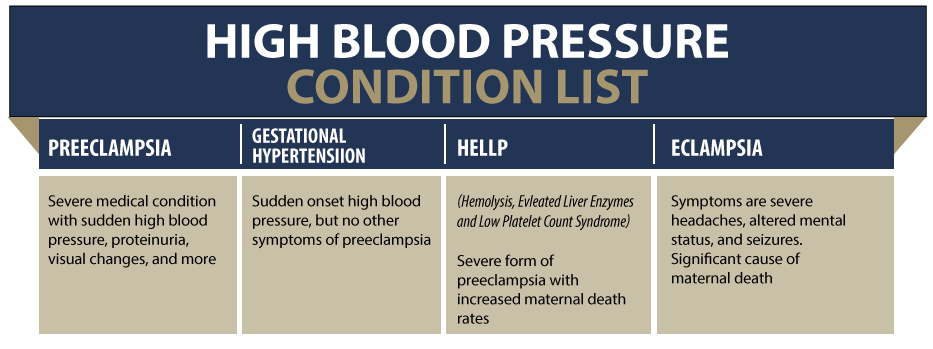
Preeclampsia is a severe medical condition that arises during pregnancy usually in the later stages. It is primarily characterized by sudden high blood pressure that usually appears after 20 weeks and often near the end of a woman’s pregnancy. Other symptoms include proteinuria (protein in the urine) and visual changes (seeing spots).
Other pregnancy complications related to high blood pressure include:
- Gestational hypertension: Women with this condition also have sudden onset high blood pressure. However, they do not have other symptoms of preeclampsia, like protein in the urine, but preeclampsia can still develop. Doctors, like obstetricians and maternal fetal medicine specialists caring for a woman with gestational hypertension should monitor her closely to watch for signs that preeclampsia is developing.
- Hemolysis, Elevated Liver enzymes, and Low Platelet count syndrome (HELLP): This is a severe form of preeclampsia linked to increased maternal death rates. When HELLP accompanies or follows preeclampsia, the condition attacks a woman’s vital organs. It also harms her baby’s health and development.
- Eclampsia: This condition sometimes develops in women with preeclampsia, especially if misdiagnosed or untreated. Untreated preeclampsia may progress into eclampsia. A mother with this condition suffers severe headaches, altered mental status, and seizures. Eclampsia is a significant cause of maternal death.
Without proper diagnosis and treatment, a pregnant woman with preeclampsia is at risk for life-threatening complications. Her unborn child could also suffer birth injury including brain damage with lifelong consequences due to medical negligence and malpractice.
Obstetricians and other doctors must watch for common risk factors of preeclampsia?
An obstetrician, maternal fetal medicine doctor or other pregnancy medical provider will review an expectant mother’s medical history and current health status during prenatal visits. Blood tests and ultrasounds are typically done to check for any problems in the pregnancy.
Since preeclampsia is dangerous, doctors might watch a mother more closely for its signs and symptoms if any of the following are true:
- It’s the mother’s first pregnancy.
- She became pregnant more than 10 years after her first pregnancy.
- The pregnancy involves more than one fetus.
- The mother had preeclampsia in a previous pregnancy.
- Her mother or sister developed preeclampsia.
- The mother developed complications in a previous pregnancy.
- She is aged 35 or older.
- Her pre-pregnancy body mass index (BMI) is greater than 30.
- Before becoming pregnant, the mother had chronic hypertension, kidney disease, thrombophilia (blood clotting disorder), diabetes, autoimmune conditions like lupus, or obstructive sleep apnea.
- The mother’s pregnancy was initiated by assistive reproductive technology like in vitro fertilization (IVF).
Doctors have a legal duty to their patients to recognize the potential for serious conditions like preeclampsia. Failing to do so puts the mother’s unborn child at risk for severe brain damage like hypoxic-ischemic encephalopathy (HIE) and death.
What are the signs and symptoms of preeclampsia?
With thorough monitoring, medical professionals can recognize that an expectant mother has developed preeclampsia and begin treatment. Recognizing an at-risk pregnancy should be the first step. Obstetricians, nurses, and other healthcare providers should also watch for the initial signs and symptoms that a woman is developing preeclampsia:

- Unusual swelling: Foot and ankle swelling is common during pregnancy. However, excessive edema in the face or hands is cause for alarm.
- Headaches: Women who are developing preeclampsia may start having unusual headaches that don’t subside with treatment.
- Vision problems: Preeclampsia can cause changes in eyesight. Some women may see spots.
- Changes in overall conditions: Other symptoms include nausea, vomiting, sudden weight gain, and shortness of breath.
In addition to these symptoms, an expectant mother with severe preeclampsia may begin to experience:
- Blood pressure readings above 160 systolic over 110 diastolic.
- Reduced number of platelets in the blood,
- Fluid in the lungs,
- Increasingly severe (blinding) headaches, and
- Pain in the stomach and upper abdomen,
Some women do not notice symptoms of early, mild preeclampsia. That’s why it is so vital for her doctor to identify her risks and monitor her more closely.
How do doctors diagnose preeclampsia?
During prenatal visits, doctors should watch for sudden increases in blood pressure.
- For a woman with previously normal blood pressure, “high” might mean a systolic reading of 140 or more or a diastolic of 90 or more.
- For women with chronic high blood pressure, a reading of 160 or more systolic over 110 or more diastolic is considered sudden onset high blood pressure.
Generally, healthcare providers should take blood pressure readings on two separate occasions at least four hours apart to ensure the accuracy of the high reading.
Doctors also routinely test a woman’s urine to diagnose preeclampsia. Most women with preeclampsia begin to secrete protein in their urine (proteinuria). Increased protein levels coupled with high blood pressure could be enough to diagnose preeclampsia. However, some women do not develop proteinuria.
In the absence of proteinuria, doctors should conduct blood tests looking for the following:
- Renal insufficiency,
- Impaired liver function,
- Low platelet count (thrombocytopenia).
Finally, doctors may treat symptoms like shortness of breath and new-onset headaches before deciding preeclampsia is to blame.
But obstetricians and other medical providers working with a pregnant woman must also monitor the baby’s wellbeing. It’s crucial to do the following tests:
- Ultrasounds: The doctor can check the baby’s growth and development, amniotic fluid levels, and the placenta’s condition.
- Nonstress test: This test checks the baby’s heart. Fetal distress can indicate that the baby is affected by the mother’s preeclampsia, uterine rupture, or placental abruption.
- Biophysical profile: Doctors and nurses combine the nonstress test results with ultrasound findings.

Failing to conduct tests and increase monitoring in a timely manner can cause significantly more severe complications. The baby of a mother with preeclampsia may experience growth delays due to the reduced blood flow. Brain injury like hypoxic-ischemic encephalopathy (HIE) can occur, especially if preeclampsia goes unnoticed or untreated.
How should preeclampsia be managed?
Doctors should begin treating preeclampsia with:
- increased prenatal visits so the mother and baby can be monitored and tested more frequently,
- at-home blood pressure testing,
- bed rest or an in-patient hospital stay, and
- daily kick counts by the mother.

Mothers with more serious preeclampsia symptoms may be hospitalized for observation. While there, doctors might administer antenatal corticosteroids to improve the baby’s lung development. Magnesium sulfate is sometimes given to control high blood pressure and prevent seizures in the mother.
Antenatal Corticosteroids: Antenatal steroids, also known as antenatal corticosteroids, are medications administered to pregnant women expecting a preterm birth. When administered, these steroids accelerate the maturation of the fetus' lungs, which reduces the likelihood of infant respiratory distress syndrome and infant mortality.
Early delivery of the baby may be discussed as an option. Signs of fetal distress move delivery from an option to a requirement because the baby is in danger of brain injury.
- If the mother’s pregnancy is less than 34 weeks and the baby’s condition is stable, doctors typically delay C-section or induction. This gives the baby more time to develop before being born.
- However, immediate delivery is necessary if the baby appears to be in trouble such as suffering from fetal distress. Fetal heart monitoring provides important signs that the baby is in trouble through tachycardia (fast heart rate) or bradycardia (slow heart rate).
- At 37 weeks, doctors may induce labor using Pitocin and Cytotec as long as the baby is doing well. Otherwise, an emergency C-section should be done without delay.

Failing to manage or treat preeclampsia can lead to life-threatening consequences for a mother and her baby.
What are the complications of preeclampsia?
Mothers with unchecked high blood pressure can have strokes that cause long-term neurological problems or are fatal. Other maternal complications include:
- Labor induction,
- Emergency C-section,
- Placental abruption that causes heavy bleeding, and
- Eclampsia, which has a high fatality rate.
Babies also suffer due to complications associated with preeclampsia, including:
- Pre-term birth that can lead to developmental and cognitive delays;
- Low birth weight (less than 5 pounds, 8 ounces),
- Hypoxia (reduced oxygen) and birth asphyxia,
- Ischemia (reduced blood flow), and
- Brain injuries or birth injuries, including hypoxic-ischemic ischemia encephalopathy (HIE).
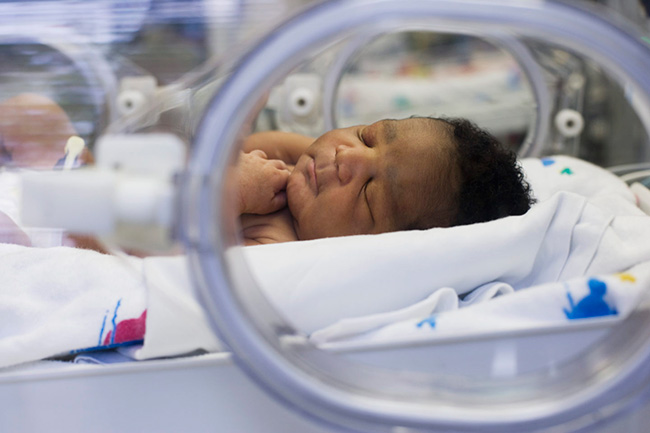
Newborn infants with HIE birth injuries often develop cerebral palsy, cognitive disabilities, developmental delays, seizure disorders, vision disabilities, and hearing impairment. When this happens due to medical negligence, medical malpractice has occurred. The families of babies with a HIE birth injury may be entitled to compensation from the medical professionals who failed them.
Can preeclampsia be prevented?
Attempts can and should be made to minimize or prevent preeclampsia. When a doctor realizes that a woman can be at risk for preeclampsia, low-dose aspirin therapy can help.
Other preventive actions include:
- increased monitoring,
- more frequent prenatal visits,
- at-home blood pressure monitoring,
- eating healthy foods and following a healthy lifestyle.
Even with interventions, at-risk women can still develop preeclampsia. As her blood pressure rises and other symptoms set in, her baby’s risk of complications increases, too.
Where Medical Providers Go Wrong
Doctors, nurses, midwives, other healthcare workers, and hospitals owe their patients a duty of care. Their duty involves providing appropriate care at all times. When caring for an expectant mother, they are holding the lives of two patients in their hands.
But sometimes they fail their patients.
Medical professionals treating a pregnant woman with preeclampsia commit medical negligence by:
- Missing or overlooking the signs and symptoms of preeclampsia,
- Failing to discuss options and risks with the mother,
- Failing to recognize signs of maternal or fetal distress, and
- Failing to deliver the baby by emergency C-section when necessary.
The only way to “cure” preeclampsia is to deliver the baby. This must be done if the symptoms of preeclampsia cannot be controlled during the pregnancy or labor and delivery process. Failing to delivery timely when the signs and symptoms of preeclampsia worsen can result in a birth injury to the baby and a potentially fatal outcome for their mother.
The families of mothers and children injured by medical negligence related to failures in the diagnosis, treatment and management of preeclampsia may be entitled to compensation from their medical providers. But it’s crucial that they discuss their case with experienced birth injury lawyers.
Is Your Child’s Birth Injury the Result of Medical Malpractice?
The parents of children who suffered birth injuries often want answers. They want to know what happened to harm their child’s brain. Were there signs of preeclampsia that the doctors and nurses failed to recognize and/or failed to respond to in a timely manner? Did they delay or even fail to consider delivering the baby by C-section despite signs of fetal distress and/or worsening preeclampsia?
Our dedicated birth injury lawyers want to help you find those answers.
We diligently investigate the facts, including a detailed examination of the fetal heart monitor strips and labor and delivery records. If this review shows the medical providers did not diagnose or respond to fetal distress, we hold responsible parties accountable by pursuing medical malpractice claims against them. The compensation our clients receive helps them pay for their child’s current and future medical treatment, assistive technology and equipment, attendant care, and the other expenses associated with caring for a child with brain injuries, seizure disorders, and cerebral palsy.
Sometimes families are afraid to talk to lawyers about their child’s case because they worry there is a fee. There is never a fee unless and until we make money recovery for our clients.

Why Should You Talk with the Knowledgeable Attorneys at Miller Weisbrod?
The only way to find out if you have a birth injury case is to talk to an attorney who understands birth injury.
At Miller Weisbrod, a team of committed professionals uses our detailed case review process to assess your potential claim. They start by learning more about you and your child. Then we gather medical records to determine what happened before, during, and after your delivery. We call in skilled medical experts who review your records and let us know if they think medical errors could have caused your child’s injuries.
If we feel medical malpractice was present, we meet with you to discuss how you can receive compensation from the medical professionals who made the errors.
At no point in our legal intake process will we ask you to pay anything. The medical review of your case and the consultation are free. We only receive payment when you do.
Contact Miller Weisbrod Olesky
National Birth Injury Law
Our National Birth Injury Attorneys, nurses, and support staff understand that parents of children with birth injuries feel overwhelmed. So, every client has the attention and support of a team of trained, compassionate professionals. But we don’t just offer compassion.
We offer a process to help you discover whether your child’s birth injury, HIE, cerebral palsy or brain injury at birth was caused by medical malpractice.
Call our offices today at (888) 987-0005 for experienced assistance in a free consultation.
Quick Links
Testimonials
- Lyric C. I feel like our voice was heard in a sense of what can possibly go wrong in a delivery and finding us answers. I feel with our settlement, we are now in a comfortable position to provide for our son.
- Lyssa L. They are not just people that say “hey let's get you money and let's go” The law firm was very thorough with us. It was awesome. I don't want to cry, because I think about and it's amazing that they were able to help me and that we were able to help my son and get the story out there.
- Jay C. Throughout the process, one thing was clear to us, the ultimate interest of our child was the utmost concern of Max and his team and as parents navigating a situation like that, that was refreshing to know we had them firmly on our side. I highly recommend them.
Popular Cities
- ★ Dallas Birth Injury
- ★ Houston Birth Injury
- ★ Atlanta Birth Injury
- ★ Chicago Birth Injury
- ★ Philadelphia Birth Injury
Locations
★ Dallas
11551 Forest Central Drive, Ste. 300
Dallas, TX 75243
★ Houston
12929 Gulf Freeway, Ste. 111
Houston, TX 77034