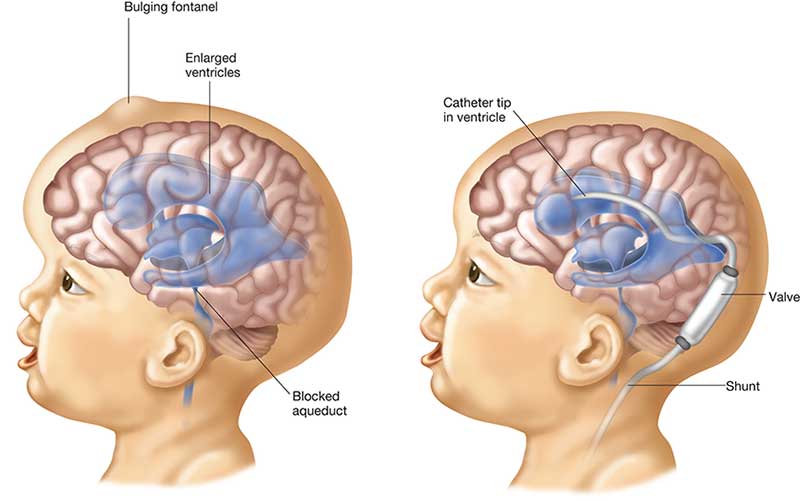
Hydrocephalus, or "water on the brain," is a medical condition that occurs when there is an excessive build-up of Cerebrospinal Fluid (CSF) in the brain. Although this fluid is a normal and necessary part of the brain's functioning, if there is a blockage flow, a lack of absorption, or overproduction of this fluid, it can lead to increased pressure on a baby's brain, expand their skull bones, and cause brain damage of varying severity.
If you suspect that your child developed hydrocephalus because of a birth injury, birth trauma or birth complication you might have grounds to file a birth injury medical malpractice claim. Our Birth Injury Attorneys and nursing professional team at Miller Weisbrod Olesky are prepared to evaluate your case and determine whether a medical professional's negligence contributed to your child's birth injury. If you would like to discuss your claim with our experts and learn what to expect from the legal process, do not hesitate to contact our firm for a free consultation.
Recent Birth Injury Settlement:
Birth Injury settlement against a hospital in which nurses and physicians failed to properly monitor the mother's blood pressure during delivery causing an HIE event resulting in neonatal seizures and cerebral palsy at birth. Our national birth injury lawyers recovered $13,750,000 for the family to help with future medical expenses and developmental therapy.
What is Hydrocephalus?
Hydrocephalus occurs when the brain's ventricles become flooded with more than the normal amount of Cerebral Spinal Fluid (CSF). CSF acts as a natural protectant by surrounding and cushioning the brain and the spinal cord.
Once the cerebral spinal fluid is produced in the ventricles, it is supposed to move through the brain and the spinal cord and get absorbed into the bloodstream. When the normal flow of CSF into the bloodstream is blocked due to an obstruction that prevents it from draining properly, it eventually builds up within the ventricles and causes extreme internal pressure inside the skull and on the brain.
The build-up of this fluid can lead to the brain being pushed against the skull, damaging delicate brain tissue and rupturing blood vessels in the brain leading to brain damage. One of the most common events that can cause hydrocephalus in infants is trauma or injury to a baby's head during labor and delivery.
With prompt diagnosis and treatment, mild cases of hydrocephalus can have little to no lasting effects. However, in other more severe cases, untreated hydrocephalus can result in lifelong brain injury or even be fatal.
Children with hydrocephalus may experience long-term birth complications such as intellectual impairments and physical or cognitive developmental delays. The severity of complications that may arise from hydrocephalus will depend upon several factors, including the cause of your child's hydrocephalus as well as the complexities of any symptoms your child is experiencing. If hydrocephalus is diagnosed and treated early, it can significantly improve your child's chances of having a favorable recovery.
What Are the Signs of Hydrocephalus in a Baby?
Signs and symptoms of hydrocephalus vary significantly depending on your child's age and how far along their condition is at the time of diagnosis. The most obvious sign in infants is an unusual enlargement of the head or bulging soft spots between the bones called fontanelles.
While each baby may experience hydrocephalus symptoms differently, here are some of the most common signs of Hydrocephalus to keep an eye out for:
An unusually large head or bulging fontanelles (soft spot between the bones)
Bulging eyes and an inability to look up when facing forward
Fixed downward gaze
Poor appetite
Seizures
Fussiness and excessive irritability
Extreme tiredness and difficult to awaken
Repetitive and severe vomiting
High-pitched crying
Swollen scalp veins
Slowed development
In addition to physical abnormalities, children with severe cases of hydrocephalus may also experience neurological complications, such as future dementia and other forms of brain damage. Since some of these symptoms, like irritability and vomiting, are common among babies, it is best to have your child checked out by a medical professional if you notice any of these changes in your newborn. When a baby is still in the womb, a doctor will use a fetal ultrasound to diagnose hydrocephalus.
A pediatrician or specialized medical professional will order imaging studies such as a Computed Tomography Scan (CT) or Magnetic Resonance Imaging (MT) and perform Intracranial Pressure Monitoring (ICP) tests to reach a final diagnosis and determine if your child has hydrocephalus. When your newborn is diagnosed with hydrocephalus that you believe resulted from medical negligence, you should speak to a birth injury attorney as soon as possible to discuss your legal options. Our lawyers consult with medical experts who can provide us with objective opinions regarding whether medical malpractice caused your child's birth injury.
Types of Hydrocephalus
Hydrocephalus can either be congenital (develops before birth) or acquired (occurs during childbirth or soon after). This condition is also further classified as either communicating hydrocephalus (non-obstructive) or non-communicating hydrocephalus (obstructive).
Communicating Hydrocephalus: This type of hydrocephalus occurs when the flow of cerebral spinal fluid is blocked after leaving the brain's ventricles. It is considered "communicating" because it can still flow between ventricles even after the brain fluid becomes blocked. Communicating hydrocephalus can arise from either inadequate Cerebral Spinal Fluid (CSF) absorption or excessive Cerebral Spinal Fluid production.
Non-Communicating Hydrocephalus: This type of hydrocephalus occurs when the flow of cerebrospinal fluid becomes blocked between the brain ventricles and the subarachnoid space. One of the most common causes of non-communicating hydrocephalus is "aqueductal stenosis," the narrowing of the small passage between the third and fourth ventricles in the middle of the brain (the aqueduct of Sylvius).
Types of Communicating Hydrocephalus
Normal Pressure Hydrocephalus (NPH): this type of hydrocephalus affects people 50 and older. It may develop after surgery, infection, injury, or stroke. Due to the gradual blocking of Cerebral Spinal Fluid (CSF) draining, this type of hydrocephalus develops slowly and subsequently causes slow fluid build-up over time. Diagnosing NPH is often difficult because symptoms are dementia-like and walking difficulties often resemble Parkinson's disease.
Hydrocephalus Ex-Vacuo: this type of hydrocephalus occurs from brain damage, a traumatic brain injury, or the development of a degenerative disease and is usually caused by stroke or an injury. As brain tissue shrinks, the ventricles are enlarged, and the cerebrospinal fluid may or may not be elevated.
Communicating and Non-Communicating Hydrocephali can further be subdivided into the following types:
Congenital Hydrocephalus: This condition often develops before birth as a result of an infection during the mother's pregnancy or because of genetic flaws during fetal development. According to Johns Hopkins Medicine, congenital hydrocephalus affects one to two of every 1,000 babies born in the U.S. Congenital hydrocephalus can often be detected prenatally using a fetal ultrasound but is more often diagnosed at birth or shortly after. Some of the most common causes of this condition are an obstruction of the cerebral aqueduct, spina bifida, or brain malformations. Symptoms of congenital hydrocephalus may include irritability, sleepiness, trouble breathing, seizures, and vomiting. Early diagnosis and treatment can limit any long-term problems and prevent brain damage.
Acquired Hydrocephalus: This condition develops at the time of birth or soon after and is often the result of a serious birth injury to the head or brain bleed. Some symptoms associated with acquired hydrocephalus may include blurred or double vision, poor coordination, confusion or memory loss, headaches, and bowel or urinary incontinence. Treatment for acquired hydrocephalus often involves removing the blockage by inserting a shunt, or with an alternative procedure called Endoscopic Third Ventriculostomy (ETV).
Treatment options vary based on the type of hydrocephalus suffered. For example, congenital hydrocephalus could be treated with a shunt, while normal pressure hydrocephalus is often treated with a lumbar puncture. Children with hydrocephalus can have a positive outlook if the condition is diagnosed and treated early. However, considering that hydrocephalus could lead to developmental delays, infants who are undiagnosed and go without treatment are at higher risk of developing harmful complications.
How is Hydrocephalus Treated?
The goal of hydrocephalus treatments for babies is to reduce pressure on their brains by draining the excess build-up of cerebral spinal fluid. Occasionally, medications may be prescribed to draw off the extra CSF.
If a doctor does not begin treatment promptly and compression on the brain lasts too long, the increased pressure can cause damage to the brain. Treatment for hydrocephalus will depend on your child's symptoms, age, general health, the cause of the hydrocephalus, and how severe their condition is.
Common Surgical Treatments for Hydrocephalus
Shunt Placement: The most common treatment for hydrocephalus is the surgical insertion of a medical device called a shunt. A shunt is a small piece of long, flexible tubing with a valve placed in the brain or spinal cord to drain excess fluid and divert the fluid to another part of the body. One end of the tubing is placed in one of the brain's ventricles and tunneled under the skin to another part of the body, such as the stomach or the heart. Children with hydrocephalus usually need a shunt system for the rest of their lives and will need to see a doctor for regular adjustments, replacements, and monitoring.
Endoscopic Third Ventriculostomy (ETV): A second surgical treatment option that can be used as an alternative to shunting is called endoscopic third ventriculostomy. This surgery is typically used for older children with non-communicating (obstructive) hydrocephalus. This is a minimally invasive procedure where a surgeon uses a small video camera to see inside the brain and make a small hole in the bottom of the third ventricle in the brain. Performing an ETV allows trapped cerebrospinal fluid to flow out of the brain and escape into its natural pathways. ETV treatment is not suitable for everyone.
Endoscopic Third Ventriculostomy with Choroid Plexus Cauterization (ETV/CPC): The third treatment option that can be used as an effective treatment for most infants with hydrocephalus and spina bifida is ETV/CPC. ETV/CPC treatment involves a surgeon making a hole in the skull and using an endoscope to make a hole in the bottom of a ventricle. By doing so, the normal flow of spinal fluid is restored. Choroid plexus cauterization involves burning or cauterizing the choroid plexus tissue to reduce the rate of CSF production and introduce a new pathway for the fluid to escape. ETV/CPC is a highly technical surgery that should only be performed by surgeons with extensive training and experience. Not all children will be good candidates for ETV/CPC treatment.
If a child ends up developing another condition like cerebral palsy, additional treatments like taking the child to physical therapy or ensuring the child takes proper medications such as anticonvulsants may be required. Getting an early and accurate diagnosis can prevent serious injury to the brain and help children with hydrocephalus have a relatively normal life span.
Because the condition often requires continual medical care, our firm will work to obtain full financial compensation on your behalf through a medical malpractice claim so your child can have access to the best possible treatment.
How Does Hydrocephalus Cause Cerebral Palsy?
When fluid builds up in the brain, it not only stretches the skull but puts pressure on the brain itself, which can lead to brain damage. In turn, this damage to the developing brain may cause cerebral palsy (CP). According to a study published by the National Library of Medicine, approximately 15% of children with cerebral palsy have hydrocephalus.
There are some cases where hydrocephalus and cerebral palsy may develop independently of each other. For example, hydrocephalus that develops prenatally may damage the brain to such an extent that cerebral palsy has already occurred by the time an infant is born. In other cases, trauma to the brain and other disorders that independently lead to CP during birth or shortly after delivery may result in cerebral palsy and secondarily cause hydrocephalus. The more severe the damage to a child's developing brain is the greater the risk of them suffering from both hydrocephalus and cerebral palsy simultaneously.
Cerebral Palsy is a lifelong condition that affects a child's movement, posture, and muscle tone. Symptoms of cerebral palsy typically appear in early childhood, and although there is no cure for this disorder, it can often be managed with treatment. Doctors and other healthcare professionals should be aware of the potential health risks that may affect mothers and their newborns. Early diagnosis and treatment of hydrocephalus can help prevent lifelong injuries such as cerebral palsy.
How Can Hydrocephalus Result from Medical Malpractice?
The term medical malpractice refers to situations where a healthcare professional or other medical staff member negligently harms a patient or causes them to suffer an injury. There are several ways in which a doctor or other medical professional may be responsible for your child suffering from hydrocephalus.
The most common instance of negligence that may factor into your child's injury is the doctor who delivered your baby causing them to sustain a head injury or other traumatic brain injury.
Head trauma may occur during childbirth when the baby becomes stuck in the birth canal, and the doctor misuses birth-aiding devices such as forceps or a vacuum extractor to help facilitate vaginal delivery. Using these devices effectively requires doctors to possess a high degree of skill and exercise care to avoid an external hydrocephalus birth trauma.
Another way hydrocephalus may be caused by medical negligence is a doctor failing to diagnose hydrocephalus and responding to it promptly by providing attentive care. A failure to diagnose hydrocephalus could cause the condition to worsen, progress too far for treatment to be effective, and even result in death. Hydrocephalus may also be the result of a doctor failing to monitor a mother and her newborn correctly during or after labor or not acting soon enough to perform surgery like an emergency C-section.
Even if a doctor was not negligent during delivery, they are responsible for recognizing signs or symptoms an infant is exhibiting that could indicate a problem. When a doctor fails to recognize these signs in a timely manner, they may be unable to prescribe and provide treatment.
A bulging or tense soft spot on the top of the baby's head
Doctors and other healthcare professionals are responsible for complying with certain protocols and adhering to an acceptable standard of care when treating patients. If you believe your doctor or another medical professional did not take the proper steps during labor or after birth, you may be able to bring legal action against them.
Our Birth Injury Lawyers review the details of your case and help you collect the right type of evidence to prove your doctor or other healthcare provider's negligence played a role in your child's birth injury.
Proving Medical Malpractice in a Birth Injury Lawsuit
It is the responsibility of doctors to treat patients with a high degree of skill and provide them with the best possible care. Because doctors owe their patients a duty of care, they must take their concerns seriously and run tests when necessary to appropriately diagnose and treat them. When a doctor fails to uphold this duty of care and causes harm to a patient, they could be held liable for medical malpractice.
It is important to remember that a birth injury lawsuit may be filed against one or more healthcare providers. In addition to medical professionals like doctors, here are some examples of other medical professionals who can be held responsible for causing an injury or harm to a patient.
Nurses
Neonatal nurses
Labor and delivery nurses
Maternal-fetal medicine specialists
Pediatricians
Pediatric neurologists
Neonatologists
Obstetricians/gynecologists
Surgeons
Hospitals
Many people are unaware that based on vicarious liability, hospitals or medical centers can be held responsible if their employees, systems, policies, or practices fall below an acceptable standard of care. For example, the hospital could be held liable for allowing an incompetent doctor or other medical staff member to keep treating patients. Likewise, in cases where unsafe or unsanitary conditions caused an injury, the healthcare facility may also be held liable.
To have a successful medical malpractice claim, you must determine if your situation meets the following four required legal elements:
Duty of care: You must be able to show proof of a valid doctor-patient relationship. Once this is established, the doctor is required to provide care that meets the standards that would be considered reasonable and acceptable according to their training and specialty.
Violation of the standard of care: The doctor or healthcare provider failed to follow a reasonable standard of care. In other words, their actions fell short of what would have been expected from a reasonable and competent healthcare professional in the same or similar circumstances.
Injuries: The medical professional's negligence or error led to the development of your child's hydrocephalus.
The patient suffered damages due to this harm: The final thing you must demonstrate is that your family incurred economic and non-economic damages because of your child's injury.
If a medical professional's failure to diagnose or treat your child's condition in a timely manner resulted in your child suffering any harm, you may be able to hold them responsible for their negligent actions or inactions. Our seasoned birth injury malpractice lawyers will perform a thorough review of the circumstances surrounding your child's birth, gather all necessary evidence to help prove your case, and assist you in recovering the financial compensation you deserve.
Recoverable Compensation from a Birth Injury Lawsuit
If your medical malpractice claim reaches a successful outcome, you may be able to recover compensation for monetary losses that have been or will be incurred as a result of the medical professional failure to diagnose or promptly treat your child's condition.
Depending on the details surrounding your case, you may be eligible to recover compensation for the following:
Medical bills
Pain and suffering
Emotional anguish
The cost of surgeries
The cost of therapies or prescription medications
The cost of ongoing care for your child
The cost of adaptive equipment
Home and vehicle modification expenses
Behavioral and educational interventions
Permanent disabilities and scarring
Loss of their ability to enjoy life
Lost future earning capacity if the child's injuries render them unable to work in the future
Loss of companionship or care parents would have otherwise received from the child if not for the injury
A parent's lost wages if they can no longer work because their child requires full-time care
Expenses involved with in-home nursing care
Other injury-related expenses
Punitive damages or exemplary may be awarded in cases where a doctor, hospital, or other medical professional is guilty of especially wrongful acts that resulted in hydrocephalus birth injuries. These damages are awarded to punish the at-fault party for their grossly negligent or even reckless behavior and deter others from committing similar harmful actions in the future.
Punitive damages usually require clear and convincing evidence to prove that the child's injuries were caused by the hospital or healthcare provider's extremely negligent or intentional actions.
The specific type and amount of compensation you may receive will depend on several factors, such as the victim's age, the severity of injuries sustained by the victim, the amount of care they are projected to need, and the financial losses suffered due to the injuries.
For example, your settlement award would likely be higher if your baby has a lifelong condition like cerebral palsy than if an initial surgery controlled your baby's hydrocephalus and there were no other issues. Additionally, the greater your economic and non-economic losses are, the higher the value of your settlement could be. If you would like to learn more about the value of your birth injury case, consult with a skilled medical malpractice attorney who can assess your case's details and provide an accurate evaluation of the potential value of your claim.
Birth Injury Wrongful Death Claims
Hydrocephalus is a treatable condition; however, if left untreated, it can be potentially life-threatening. If not diagnosed and treated, the build-up of cerebral spinal fluid within the brain can be fatal. Infant wrongful death can happen when a doctor fails to diagnose or promptly treat a severe case of hydrocephalus. You may be entitled to compensation for the loss of your newborn due to medical negligence and malpractice.
Loss of income, support, and other benefits the deceased would have provided
Loss of the deceased's companionship and care
Physical pain and emotional suffering endured by the deceased before death
Loss of enjoyment of life the deceased would have experienced
Pursuing an infant wrongful death settlement can help prevent future errors and tragedies from happening. Starting a lawsuit in such cases and standing up to medical institutions and the caregivers entrusted with your baby's life isn't always easy. To get the compensation and justice you deserve, it is crucial that you rely on the expertise of a skilled medical malpractice attorney who can give you the best chance of recovering compensation for the loss of your child.
How a Birth Injury Lawyer Can Help
Pursuing a hydrocephalus claim, like other birth injury claims, is complicated and not easily resolved. A birth injury lawyer with access to valuable resources and a profound knowledge of medicine and law can assist you through the complex litigation process.
Here's how our medical malpractice attorneys can help:
Build your case by collecting evidence including medical records, diagnostic test results, physician or nurse notes, witness statements, and consult with independent medical experts.
Identify and contact the relevant healthcare provider and their lawyers or insurance company with details of your claim.
File a lawsuit and ensure the defendant responds to your claim promptly.
Evaluate the defendant's response and let you know what options are available.
Using all the evidence we've gathered; we'll negotiate with the defendant's attorneys and advocate for your rights against the medical provider's insurance company.
Take your case to trial if we cannot reach a fair settlement.
If your baby has been diagnosed with hydrocephalus following a preventable birth injury and you want to explore the possibility of filing a medical malpractice claim, connect with one of our birth injury attorneys today, who can listen to your story and help you explore your legal options. It is essential to remember that there are time limits on these cases, and when you discuss your case with our birth injury lawyers, they can provide you with a better understanding of the deadlines that apply in your case.
Birth Injury Statute of Limitations
A statute of limitations is a law that specifies the maximum amount of time a person has to file a lawsuit against a company or an individual. It is crucial to keep in mind that this time period can vary depending on the type of claim you're filing and what state you live in. If you fail to file your claim within the appropriate time frame, you risk losing your right to take legal action and recover compensation for your losses.
The discovery rule makes an exception to the statute of limitations by extending the deadline for filing a case. Under this exception, the clock usually starts running on the date when an individual discovers or reasonably should have discovered an injury. To learn more about the time limits that may apply in your case, consult with a medical malpractice attorney who can ensure you don't miss your deadline.
Talk to Our Birth Injury Lawyers Today
At Miller Weisbrod Olesky, our nationally recognized birth injury lawyers have successfully represented families of children whose birth injury was caused by medical negligence in more than 20 states. Once you hire our law firm, our skilled birth injury lawyers and in-house team of registered nurses and nurse attorneys will get to work thoroughly investigating whether medical negligence caused injury to your child.
As soon as we've obtained relevant medical records and decided whether they support a potential medical malpractice lawsuit, we consult a vast network of medical experts to ensure your case review is completely fair and objective. Some of these experts include:
Our National Birth Injury Attorneys, nurses, and support staff understand that parents of children with birth injuries feel overwhelmed. So, every client has the attention and support of a team of trained, compassionate professionals. But we don’t just offer compassion.
Lyric C. I feel like our voice was heard in a sense of what can possibly go wrong in a delivery and finding us answers. I feel with our settlement, we are now in a comfortable position to provide for our son.
Lyssa L. They are not just people that say “hey let's get you money and let's go” The law firm was very thorough with us. It was awesome. I don't want to cry, because I think about and it's amazing that they were able to help me and that we were able to help my son and get the story out there.
Jay C. Throughout the process, one thing was clear to us, the ultimate interest of our child was the utmost concern of Max and his team and as parents navigating a situation like that, that was refreshing to know we had them firmly on our side. I highly recommend them.