Low Birth Weight
What is Low Birth Weight?
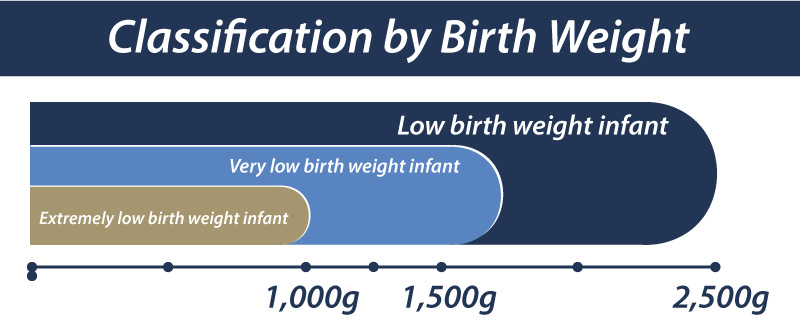
Low birth weight is a medical term used to describe a baby that weighs less than 5.5 lbs (2,500 g) at the time of birth. To put this in perspective, the average birth weight of a newborn is about 8 pounds. Babies with low birth weight appear smaller than an average baby. They will typically have a thin body and minimal body fat, with the head looking larger than the rest of the body.
Babies that weigh less than 3.3 lbs (1,500 g) at birth are termed as very low birth weight (VLBW), while those weighing less than 2.2 lbs (1,000 g) are termed as extremely low birth weight (ELBW). In the US, more than 8 percent of all babies are born with a low birth weight. Premature birth and low birth weight usually go together because a preterm baby has not yet fully developed or gained the full normal body weight.
Low birth weight babies are at a greater risk of birth injury and birth complications during labor and delivery, including cardiovascular, respiratory, and neurological damage. According to the CDC, low birth weight babies, and in particular babies with very low birth weight (VLBW), are at a higher risk of having cerebral palsy.
Medical Negligence and Low Birth Weight
Considering the risks to the baby’s health in case of low birth weight, medical providers, like obstetricians and maternal fetal medicine specialists, should be alert to recognize the condition and provide timely and appropriate care to the baby. Inadequate or improper prenatal testing or prenatal care can contribute to low birth weight and the resulting health consequences for the baby.
Failure to detect problems in-utero, such as placental abnormalities, maternal infection, or inadequate maternal weight gain, or lack of proper fetal monitoring and prenatal tests to track the baby’s growth and development throughout the pregnancy can lead to preventable low birth weight complications.
If the medical provider has negligently failed to identify low birth weight risks, they may not be able to provide medications, prenatal vitamins and nutrition supplements, and order more frequent prenatal tests and follow-ups. With proper fetal monitoring and medical interventions, some of the problems can be treated during pregnancy to avoid a low birth weight outcome.
In addition, if a low birth weight baby’s care is mismanaged during and after delivery, it may also constitute medical negligence if it led to the baby’s birth complications. If your baby’s low birth weight and related birth injuries (such as, hypoxic-ischemic encephalopathy which can lead to cerebral palsy) were preventable, you may have a case for medical malpractice against the negligent healthcare providers.
Causes of Low Birth Weight
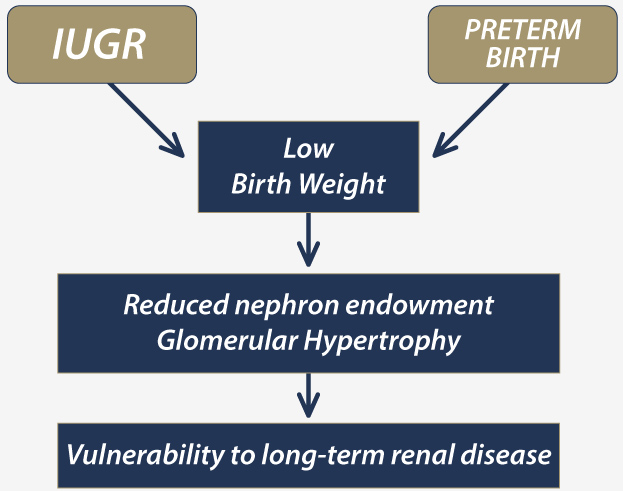
When a baby is born before 37 weeks of gestation, it is defined as premature birth or preterm birth. This is the most common cause of low birth weight. Premature babies get less time in the mother’s womb to grow, develop, and gain weight. A significant part of the baby’s weight gain occurs in the second half of the pregnancy.
A second leading cause of low birth weight is IUGR or intrauterine growth restriction. This may occur due to placental insufficiency (a pregnancy complication where the delivery of oxygen and vital nutrients to the baby gets restricted and affects their growth.) Regular ultrasound screenings during pregnancy can help in early detection of IUGR, which should be followed by an MRI to confirm the diagnosis.
Risk Factors for Low Birth Weight
Babies born prematurely or affected by IUGR are clearly at the highest risk of low birth weight. But the medical provider should also be alert to other risk factors that may contribute to low birth weight, such as:
- Age: Teen mothers are at a significantly higher risk of giving birth to a low birth weight baby.
- Ethnicity: African-American babies have twice the risk of an average baby to be born with low birth weight.
- Multiple Births: More than 50% of all twins and other multiple babies are affected by low birth weight because are often born prematurely.
- Maternal Health: Expectant mothers with pregnancy complications, high-risk pregnancies, improper prenatal care, poor pregnancy diet, or those exposed to smoking, alcohol, and drugs are at a higher risk.
- Preeclampsia: maternal high blood pressure.
- Placental problems: such as, placental previa, placental abruption.
Potential Birth Complications of Low Birth Weight
- Oxygen deprivation during labor or delivery, which may cause hypoxic-ischemic encephalopathy (HIE), potentially leading to cerebral palsy.
- Neurological birth complications, such as intraventricular hemorrhage (brain bleeds)
- Blindness including Retinopathy of Prematurity
- Breathing difficulties, including respiratory distress syndrome (RDS)
- Gastrointestinal complications, including necrotizing enterocolitis (severe inflammation of the intestines, usually in premature babies)
- Feeding difficulties
- Unstable body temperature
- Infection
- Sudden infant death syndrome (SIDS)
Diagnosing Low Birth Weight
Regular prenatal testing is the most important way to monitor the baby’s growth and development during pregnancy. Apart from tracking and documenting the mother’s steady weight gain throughout the pregnancy, the medical provider should also perform the following checks:
Fundal Height Measurement

Fundal height is the distance between the top of the uterus (fundus) and the pubic bone. The medical provider should measure the fundal height accurately in centimeters and document it for comparison with other prenatal test results. After 20 weeks of gestation, the fundal height should be equivalent to the number of weeks of pregnancy. For instance, at 25 weeks of gestation, the fundal height should be about 25 cm. The fundal height measurements correlate with the size of the baby, especially the length which is an indicator of the weight.
Fetal Ultrasound Monitoring
The baby’s growth and development during pregnancy can be reliably checked with fetal ultrasound exams. Ultrasound technology involves the use of sound waves to produce an image of the in-utero baby. Ultrasound measurements are usually more accurate than fundal height measurements. The medical provider should take measurements of the baby’s head, abdomen, and femur (upper leg bone) to estimate their weight.
Body Weight Measurement at Birth
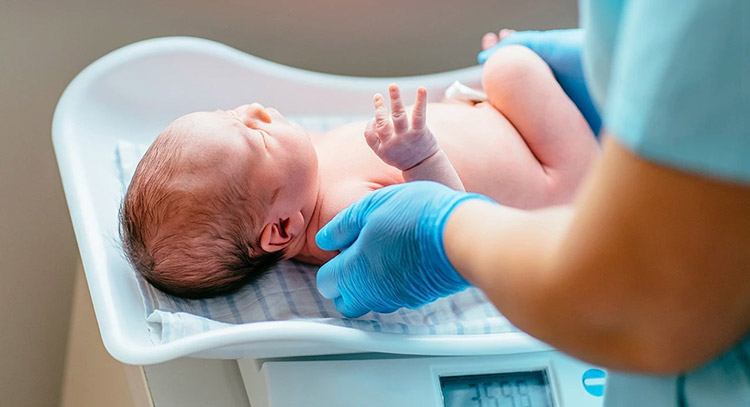
The medical team should weigh the baby within the first few hours after birth. Low birth weight can be diagnosed by comparing the weight measurement against the standard thresholds of birth weight established by medical researchers. Babies weighing less than 5.5 lbs are diagnosed with low birth weight. If the baby weighs less than 3.3 lbs, the diagnosis is very low birth weight (VLBW) and in case of weight below 2.2 lbs, the baby is diagnosed with extremely low birth weight (ELBW).
Management of Low Birth Weight
Care strategies for babies with low birth weight should be formulated based on the medical provider’s evaluation of the baby’s gestational age, health complications or medical history, and the baby’s tolerance for specific therapies, procedures, or medications.
Low birth weight management usually includes:
- Specialized care in the NICU (neonatal intensive care unit) – nearly all low birth weight babies should receive this care until they have gained weight and are healthy enough to go home.
- Thermal management of the baby’s body temperature using techniques, such as temperature controlled beds in the NICU.
- Feeding management, which may have to be done intravenously (IV) or by inserting a tube into the baby’s stomach if they are unable to suck or swallow.
- If the low birth weight baby is diagnosed with hypoxic-ischemic encephalopathy (HIE), then hypothermia therapy* should be administered within the first six hours of birth to help reduce brain damage and the risks of cerebral palsy.
* Contraindications for Hypothermia Therapy
According to researchers, the exclusion (disqualification) criteria for hypothermia therapy for babies include:
- Birth weight: less than 3.97 lbs (1,800 g)
- Gestational age: less than 36 weeks
- Age more than six hours at the time of therapeutic hypothermia initiation
Is Your Child’s Birth Injury the Result of Medical Malpractice?
Parents whose children suffer from low birth weight related birth trauma or birth complications want and deserve answers as to the cause of their child’s birth injury and whether mistakes by the doctors and nurses contributed to the injury.
- Were there signs of birth injury or birth complications during the pregnancy, labor, and delivery process, or presence of risk factors, which were either not recognized or properly treated?
- During the labor and delivery, were there clear indications that the baby was suffering from fetal distress, but appropriate actions were not taken by the obstetrician or nurses?
- Was there a delay in diagnosis of a low birth weight pregnancy that led to later complications, including brain injury?
- Did the medical team fail to order a series of tests to diagnose this birth complication in a timely manner?
- Was the decision to perform a cesarean delivery delayed leading to birth trauma during vaginal delivery or labor?
- Did the neonatal resuscitation team fail to quickly begin important breathing support?
- Should brain cooling (also called “hypothermia therapy”) have been provided to your baby, but the doctors and nurses failed to perform the appropriate tests or ignored the results of the tests?
Our national birth injury attorneys have extensive experience in this and all areas of birth injury medical malpractice. The lawyers and nurses at Miller Weisbrod Olesky will help you determine if mistakes of the medical providers caused a birth injury to your child, including Hypoxic-Ischemic Encephalopathy (HIE) or cerebral palsy.
Our award-winning birth injury attorneys represent families all over the United States in their time of need after a wrongful birth. We use our skills and expertise to obtain for you and your child a medical malpractice settlement that will help provide specialized medical therapy in order to maximize the quality of life and independence of your child throughout their life.
Sometimes families are reluctant to contact a medical malpractice lawyer. It’s also not uncommon for parents to feel overwhelmed by the responsibilities they encounter in caring for their injured child and worried that they will not be able to help out in a lawsuit involving their child’s birth injury. Our birth injury attorneys and nursing staff will address these hesitations and concerns, so you can focus on your child and maximizing their care.
Registered Nurses and Nurse-Attorneys Are a Vital Part of Our Birth Injury Team…and Yours

Most birth injury law firms will employ one or two nurses to assist the review of cases and medical research. But Miller Weisbrod Olesky offers an unmatched number of nurses and nurse-attorney employees support to both the birth injury attorneys and our clients.
Our team of registered nursing staff and nurse-attorneys bring a deep level of medical and personal insight to every client’s case. Our nursing team includes both an experienced labor and delivery nurse as well as an ICU nurse. Working closely with the rest of the team, they investigate the reasons behind a birth injury and how medical professionals breached their standard of care.
Why Should You Talk with the Highly Capable Attorneys at Miller Weisbrod Olesky?

The only way to find out if you have a birth injury case is to talk to a lawyer experienced in birth injury lawsuits. It’s not uncommon that a birth related complication results in a preventable birth injury, including cerebral palsy, but it takes a detailed expert review by a birth injury attorney of the medical records from your child’s birth to determine if the birth injury was the result of medical malpractice.
At Miller Weisbrod Olesky, a team of committed lawyers, nurses and paralegals uses our detailed medical negligence case review process to assess your child’s potential birth injury case. We start by learning more about you and your child and the status of meeting/missing developmental milestones. Then we gather medical records to determine what happened before, during pregnancy. We call in documented and proven medical experts who review your records and let us know if they think medical errors could have caused your child’s injuries.
If we feel medical negligence caused or contributed to wrongful birth in your case, we meet with you to discuss how you can receive compensation from the medical professionals who made the errors. Our birth injury attorneys have recovered millions of dollars in settlements for families of children that have suffered a birth injury.
At no point in our legal intake process will we ask you to pay anything. The medical review of your case and the consultation are free. We only receive payment when you do no matter how long or tough your case is.
Contact Our Birth Injury Lawyers
National Birth Injury Law
Our National Birth Injury Attorneys, nurses, and support staff understand that parents of children with birth injuries feel overwhelmed. So, every client has the attention and support of a team of trained, compassionate professionals. But we don’t just offer compassion.
We offer a process to help you discover whether your child’s birth injury, HIE, cerebral palsy or brain injury at birth was caused by medical malpractice.
Call our offices today at (888) 987-0005 for experienced assistance in a free consultation.
Quick Links
Testimonials
- Lyric C. I feel like our voice was heard in a sense of what can possibly go wrong in a delivery and finding us answers. I feel with our settlement, we are now in a comfortable position to provide for our son.
- Lyssa L. They are not just people that say “hey let's get you money and let's go” The law firm was very thorough with us. It was awesome. I don't want to cry, because I think about and it's amazing that they were able to help me and that we were able to help my son and get the story out there.
- Jay C. Throughout the process, one thing was clear to us, the ultimate interest of our child was the utmost concern of Max and his team and as parents navigating a situation like that, that was refreshing to know we had them firmly on our side. I highly recommend them.
Popular Cities
- ★ Dallas Birth Injury
- ★ Houston Birth Injury
- ★ Atlanta Birth Injury
- ★ Chicago Birth Injury
- ★ Philadelphia Birth Injury
Locations
★ Dallas
11551 Forest Central Drive, Ste. 300
Dallas, TX 75243
★ Houston
12929 Gulf Freeway, Ste. 111
Houston, TX 77034