Neonatal Stroke
Stroke At And Around Birth
Perinatal stroke, also known as an ischemic attack or a cerebrovascular event, is a life-threatening birth complication that occurs when the blood supply to a part of the baby’s brain is cut off. Perinatal stroke can occur anytime from 20 weeks gestation to 28 days of birth, but it’s most commonly seen during the first week after birth.
Strokes can be caused by a blot clot, a brain bleed or birth trauma that can lead to either a brain bleed or clot. Strokes can also be the result of or occur along with hypoxic-ischemic encephalopathy or HIE which results in birth asphyxia. When blood supply to the brain is cut off or restricted, this causes brain cells to die.
A stroke is typically detected shortly after birth in a baby who is experiencing seizures or has weak muscle tone and poor stimulation. Neuroimaging techniques such as MRI can confirm the diagnosis. Consequences of a perinatal stroke may include birth injuries such as epilepsy, cerebral palsy, or developmental delays as a result of brain injury.

Types of Perinatal Stroke
Perinatal strokes can be classified according to the time of occurrence as follows:
- Fetal Stroke: occurring prior to or close to birth
- Neonatal Stroke: Occurring from the time of birth to 28 days post-birth
- Presumed Perinatal Stroke: Precise time of the onset of stroke is unknown, but it’s assumed to be neonatal
Strokes can also be classified by ischemic or hemorrhagic. Ischemic strokes are usually caused by either HIE and/or a blood clot that results in oxygen supply being cut off to the brain. Hemorrhagic strokes are usually the result of birth trauma from the use of equipment like forceps or vacuum extractor devices.
Transient Ischemic Attack

A transient ischemic attack (also called a mini stroke or a warning stroke) is a type of ischemic stroke. The symptoms of these strokes can disappear within hours or even minutes of occurring.
Doctors must carefully monitor babies who undergo a transient ischemic attack for further signs of brain damage at birth. They should take note of any potential symptoms when assigning the baby’s APGAR score.
About Transient Ischemic Attack
Perinatal Stroke and HIE
Ischemic strokes have a significant association with fetal hypoxia. Studies have shown that severe fetal hypoxia may be a key cause of ischemic strokes and hypoxic-ischemic encephalopathy (HIE), which can lead to cerebral palsy. In other words, a stroke around the time of birth may be a major cause of cerebral palsy and other neurologic disorders.
In a study involving 250 newborns, researchers found that 35% of the strokes were related to birth asphyxia. This included term babies who were diagnosed with hypoxic-ischemic encephalopathy. Another study that examined the health data of 111 children who had suffered a perinatal stroke found that 68% of them eventually developed cerebral palsy.
Risk factors of perinatal stroke and HIE may include preventable maternal, placental, fetal, or neonatal complications that occurred or became more severe due to medical negligence. Examples of these preventable or treatable conditions include:
- Preeclampsia (maternal hypertension)
- Chorioamnionitis
- Maternal infections
- Gestational Diabetes
- Periventricular leukomalacia (white matter damage)
- Assisted device delivery injury
- Umbilical cord prolapse
- HELLP syndrome
- Placenta previa
- Placental abruption
- Premature Rupture of the Membranes (PROM)
- Oligohydramnios
- Polyhydramnios
- Fetal acidosis
- Newborn jaundice
- Prolonged or arrested labor
Diagnosis of Stroke in Newborns

Perinatal (around the time of birth) or neonatal (at the time of birth) ischemic stroke is the most common cause of brain damage in children, which can lead to cerebral palsy and other neurodevelopmental disabilities.
Early diagnosis is critically important so that hypothermia (brain cooling therapy) can be appropriately administered to treat the symptoms of stroke and/or HIE in the newborn. Research has shown the neuro-protective effects of hypothermia in babies affected by a neonatal arterial ischemic stroke (NAIS). Preventative measures such as emergency cesarean section should be considered if continuous fetal heart rate monitoring indicates fetal distress.
Diagnosis and evaluation of a neonatal stroke and HIE is based on neuroimaging with MRI using diffusion-weighted MRI technique. If the baby is unstable due to the effects of the stroke, it may not always be possible to perform an early MRI. When this birth complication occurs, the doctors may have to use other imaging techniques, such as computed tomography (CT) scan or cranial ultrasound.
In addition to MRI imaging, certain laboratory tests can support the diagnostic evaluation of a newborn stroke:
- Electrocardiogram (ECG) – traces the heart rhythm
- Echocardiogram (ECHO) – ultrasound image of the heart
- Electroencephalogram (EEG) – evaluation of brain activity
- Blood Clotting Tests – short tests to rule out clotting disorders
- Lumbar Puncture Test – tests for brain bleeds or brain inflammation
There are often clinical signs before imaging that should raise the suspicion of doctors and nurses that a newborn baby suffered a stroke these include:
- Trouble feeding
- Seizure activity like starring, jerking or unusual eye and arm/leg movement
- Breathing irregularities
Hypothermia Therapy to Treat Brain Damage

The only established treatment that may help repair or minimize brain damage from HIE and neonatal stroke is therapeutic hypothermia. This is a non-invasive procedure to cool down the baby’s brain in a controlled manner in order to slow inflammation and cell death in order to enable the brain tissue to heal and self-repair. Cooling (hypothermia therapy) also slows down the progression of brain injury due to a stroke and HIE.
In order to be effective, this brain cooling therapy must be administered quickly after the oxygen-depriving brain injury (ideally within six hours of the baby’s birth). Depending on the medical protocol or the type of equipment available at the NICU, whole body cooling or selective brain cooling may be performed.
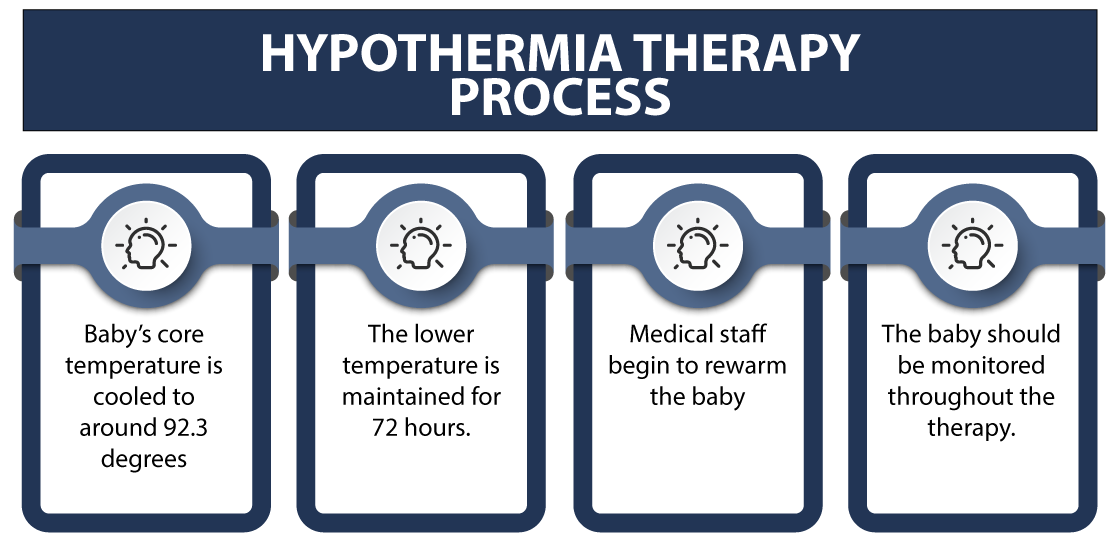
The medical team should continuously monitor the baby’s response to hypothermia therapy and be prepared to make appropriate interventions when necessary. Before, during and after the hypothermia process, the medical providers should:
- Perform blood gas tests to determine acid levels in the baby’s blood and take steps to manage acidosis
- Ensure that normal blood glucose levels are maintained
- Provide emergency respiratory support if needed
- Test and treat the baby for any infection
- Monitor for seizure activity using EEG tests
- Maintain sedation during the therapy at safe levels
Once the hypothermia therapy is completed, the medical team should slowly re-warm the baby in order to avoid reperfusion injury (damage that may occur after the restoration of blood supply to the brain tissue post the ischemic attack). EEG monitoring should be continued during re-warming due to an increased risk of seizures at this time.
Is Your Child’s Birth Injury the Result of Medical Malpractice?
Parents whose children suffer from stroke related birth injuries or birth complications want and deserve answers as to cause of their child’s injury and whether mistakes by the doctors and nurses contributed to the injury.
- Were there signs of birth injuries or birth complications during the pregnancy, labor, and delivery process, or presence of risk factors, which were either not recognized or properly treated?
- Did the medical team fail to order a series of tests to diagnose a stroke in a timely manner?
- Was the decision to perform a cesarean delivery delayed?
- During the labor and delivery, were there clear indications that their baby was suffering from fetal distress, but appropriate actions were not taken by the obstetrician or nurses that led to a perinatal stroke?
- Did the neonatal resuscitation team delay in providing important breathing support required after the baby suffered a stroke?
- Was there a delay in starting brain cooling (“hypothermia therapy”) in order to slow or stop the progression of the brain injury caused by the perinatal stroke?
The focused and experienced birth injury lawyers at Miller Weisbrod Olesky, who have handled hundreds of birth injury cases, will help you determine if mistakes of the medical providers caused a birth injury to your child, including Hypoxic-Ischemic Encephalopathy (HIE) or cerebral palsy. Our award-winning birth injury attorneys have represented families throughout the United States in their time of need after a birth injury. We use our experience and expertise to obtain you and your child a medical malpractice settlement that will help provide specialized medical therapy to maximize the quality of life and independence of your child throughout their life.
Sometimes families are reluctant to contact a medical malpractice lawyer. It’s also not uncommon for parents to feel overwhelmed by the responsibilities they encounter in caring for their injured child and worried that they will not be able to help out in a lawsuit involving their child’s birth injury. Our birth injury attorneys and nursing staff will address these hesitations and concerns, so you can focus on your child and maximizing their care.
Registered Nurses and Nurse-Attorneys Are a Vital Part of Our Birth Injury Team…and Yours

Most birth injury law firms will employ one or two nurses to assist the review of cases and medical research. But Miller Weisbrod Olesky offers an unmatched number of nurses and nurse-attorney employees support to both the birth injury attorneys and our clients.
Our team of registered nursing staff and nurse-attorneys bring a deep level of medical and personal insight to every client’s case. Our nursing team includes both an experienced labor and delivery nurse as well as an ICU nurse. Working closely with the rest of the team, they investigate the reasons behind a birth injury and how medical professionals breached their standard of care.
Why Should You Talk with the Knowledgeable Attorneys at Miller Weisbrod Olesky?
The only way to find out if you have a birth injury case is to talk to a lawyer experienced in birth injury lawsuits. It’s not uncommon that a birth related complication results in a preventable birth injury, including cerebral palsy, but it takes a detailed expert review by a birth injury attorney of the medical records from your child’s birth to determine if the birth injury was the result of medical malpractice.
At Miller Weisbrod Olesky, a team of committed lawyers, nurses and paralegals uses our detailed medical negligence case review process to assess your child’s potential birth injury case. We start by learning more about you and your child and the status of meeting/missing developmental milestones. Then we gather medical records to determine what happened before, during, and after your delivery. We call in skilled medical experts who review your records and let us know if they think medical errors could have caused your child’s injuries.
If we feel medical negligence caused or contributed to your child’s injuries, we meet with you to discuss how you can receive compensation from the medical professionals who made the errors. Our birth injury attorneys have recovered millions of dollars in settlements for families of children that have suffered a birth injury.
At no point in our legal intake process will we ask you to pay anything. The medical review of your case and the consultation are free. We only receive payment when you do.
Contact Our Birth Injury Lawyers
National Birth Injury Law
Our National Birth Injury Attorneys, nurses, and support staff understand that parents of children with birth injuries feel overwhelmed. So, every client has the attention and support of a team of trained, compassionate professionals. But we don’t just offer compassion.
We offer a process to help you discover whether your child’s birth injury, HIE, cerebral palsy or brain injury at birth was caused by medical malpractice.
Call our offices today at (888) 987-0005 for experienced assistance in a free consultation.
Quick Links
Testimonials
- Lyric C. I feel like our voice was heard in a sense of what can possibly go wrong in a delivery and finding us answers. I feel with our settlement, we are now in a comfortable position to provide for our son.
- Lyssa L. They are not just people that say “hey let's get you money and let's go” The law firm was very thorough with us. It was awesome. I don't want to cry, because I think about and it's amazing that they were able to help me and that we were able to help my son and get the story out there.
- Jay C. Throughout the process, one thing was clear to us, the ultimate interest of our child was the utmost concern of Max and his team and as parents navigating a situation like that, that was refreshing to know we had them firmly on our side. I highly recommend them.
Popular Cities
- ★ Dallas Birth Injury
- ★ Houston Birth Injury
- ★ Atlanta Birth Injury
- ★ Chicago Birth Injury
- ★ Philadelphia Birth Injury
Locations
★ Dallas
11551 Forest Central Drive, Ste. 300
Dallas, TX 75243
★ Houston
12929 Gulf Freeway, Ste. 111
Houston, TX 77034